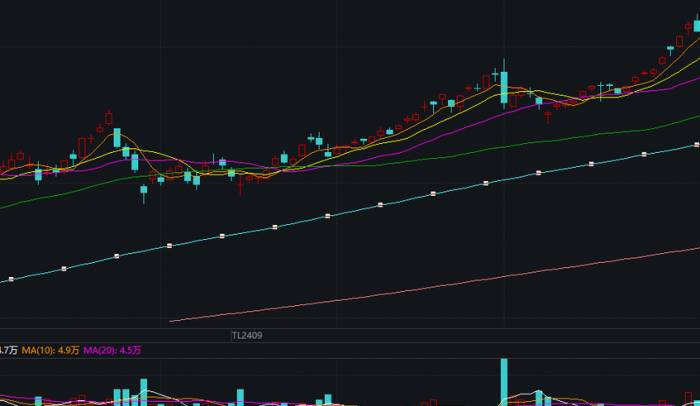
If you're looking at the SSE Composite Index, you're probably trying to figure out how to get a piece of China's economic story. But here's the thing most articles don't tell you: treating the index as a single, monolithic entity is your first mistake. The real opportunity—and the real work—lies in understanding the individual stocks that make it up. I've spent years analyzing these A-shares, and I can tell you that the difference between a generic "China play" and a targeted investment in the right SSE constituent is night and day. This guide cuts through the noise. We'll move past the basic definition and dive into the actionable details: the types of companies you're actually buying, the concrete steps to evaluate them, and the strategies that work when the market gets volatile.
What You'll Find in This Guide
What Exactly is the SSE Composite Index?
Let's get the textbook part out of the way quickly. The SSE Composite Index is the main benchmark for the Shanghai Stock Exchange. It tracks the performance of all listed A-shares and B-shares on the exchange. Think of it as China's equivalent to the S&P 500 for the US, but with its own unique rules and characteristics.
The key detail most people gloss over is its all-share, capitalization-weighted methodology. Unlike an index that picks a select few, this one includes (almost) everyone. That means a massive, state-owned bank like Industrial and Commercial Bank of China (ICBC) has an outsized influence on the index's movement compared to a smaller tech firm. Your perception of "how the Chinese market is doing" is often just a reflection of how these financial behemoths are faring.
I remember early in my analysis, I'd see the index dip and panic, assuming it was a broad-based sell-off. Later, digging into the data from the exchange, I realized it was often just one or two sectors having a bad day. That's the first lesson: the index number is a headline, not the full story. You need to read the article beneath it.
The Major Categories of SSE Composite Index Stocks
You can't make informed decisions if you don't know what's in the box. The SSE Composite isn't a uniform block. It's a mosaic of sectors, each behaving differently. Based on my tracking and the official industry classifications from the exchange, here’s a breakdown of the dominant players you're effectively buying into when you look at the index.
| Sector Category | Typical Weight in Index | Key Characteristics & Examples | What to Watch For |
|---|---|---|---|
| Financials | Very High (Often 20-35%) | The heavyweight champions. Includes the "Big Four" banks (ICBC, China Construction Bank, etc.), insurers (Ping An), and securities firms. They are profitable, pay dividends, but are tightly linked to China's macroeconomic policy and credit cycles. | Central bank interest rate decisions, loan growth data, and non-performing loan ratios. These stocks can make the index feel sluggish. |
| Consumer Staples & Discretionary | Significant & Growing | This is the domestic consumption story. Think Kweichow Moutai (the famous baijiu producer), dairy company Yili, or home appliance maker Midea. Less volatile than tech, often with strong brand loyalty. | Retail sales data, consumer confidence indices, and brand-specific news. A scandal or shift in consumer taste can hit a single stock hard without crushing the sector. |
| Industrials & Materials | Core Component | Companies in manufacturing, construction, aerospace, and basic materials like steel and chemicals. Examples include SAIC Motor (automobiles) or China State Construction. These are cyclical, rising and falling with infrastructure spending and global commodity prices. | Government infrastructure announcements, PMI (Purchasing Managers' Index) figures, and global demand for raw materials. They are a direct bet on China's industrial activity. |
| Technology & Healthcare | Increasing Influence | A more diverse and exciting group. Includes semiconductor firms, pharmaceutical companies, and some software players. While the tech giants are often listed in Hong Kong or the US, the SSE has a growing roster of specialized leaders in these fields. | Regulatory changes (especially in tech and pharma), R&D pipeline news, and export controls. Volatility is higher here, but so is growth potential. |
Notice I didn't just list companies. I linked them to what you, as an investor, should actually be monitoring. Watching the index without understanding these sector dynamics is like trying to drive while only looking at the speedometer.
How to Invest in SSE Composite Index Stocks: A Step-by-Step Approach
Okay, you're convinced you need to look at the stocks, not just the index. How do you actually do it? Here's the process I follow, stripped of theory and focused on execution.
Step 1: Access and Tools
First, you need the right data. You can't rely on Western financial news alone. Bookmark the official Shanghai Stock Exchange website. Its English section has constituent lists, company announcements, and trading data. For reliable English analysis of specific companies, I cross-reference reports from sources like The Financial Times or Reuters. A common mistake is using a single, generic stock screener; the financial metrics for a Chinese bank are evaluated differently than for a US one.
Step 2: The Evaluation Framework (Beyond the P/E Ratio)
Everyone looks at the Price-to-Earnings ratio. In China's market, that's just the entry ticket. You need a broader checklist:
- Government and Policy Linkage: Is this company a state-owned enterprise (SOE)? If so, its strategy might prioritize national goals over shareholder returns. This isn't inherently bad—it can mean stability—but you must be aware of it.
- Debt Levels & Transparency: Scrutinize the balance sheet. Some sectors, especially property and heavy industry, have carried high debt loads. Look for trends, not just a single number.
- Dividend History: Many large SSE constituents, particularly in finance and staples, have consistent dividend policies. This can provide a cushion during flat market periods. I always check the payout ratio to see if it's sustainable.
Step 3: Building a Strategy Around the Index
You have three main paths, and I've tried them all.
The Broad Index ETF Route: The easiest. You buy an ETF like the iShares MSCI China A ETF or a similar product that tracks the broader A-share market (which heavily overlaps with the SSE Composite). This is for you if you believe in the long-term growth of China's economy but don't want to pick stocks. You get the good, the bad, and the ugly—all in one basket.
The Thematic Stock Picking Route: This is where the work pays off. You use the SSE Composite as a universe to search from. Maybe you believe in the aging population theme, so you deep-dive into all the healthcare and pharmaceutical stocks listed on the SSE. You ignore the banks and builders. Your portfolio performance will diverge significantly from the index, for better or worse.
The Core-Satellite Approach (What I Prefer): This is my go-to. I use a low-cost A-share ETF as my "core" holding (maybe 60-70% of my China allocation). This gives me baseline exposure. Then, I use my research to pick 3-5 individual "satellite" stocks from the SSE that I have high conviction in—perhaps a consumer brand I think is undervalued or an industrial leader with a new technology. This balances diversification with the potential for alpha.
Common Mistakes Investors Make (And How to Avoid Them)
Let's talk about errors. I've made a few, and I see them repeated constantly.
Mistake 1: Chasing the Index Number. People see the SSE Composite hit 3,000 or 3,500 and think it's a signal. It's not. The index level alone is meaningless without context—valuation, sector rotation, liquidity. I focus on the price-to-book ratio of the overall market and compare sector valuations within it, rather than the absolute number.
Mistake 2: Ignoring Currency and Access Mechanics. As a foreign investor, you're usually buying through the Stock Connect scheme or an international ETF. There are quotas, trading hours differences, and the currency risk of the Renminbi. A 10% stock gain can be wiped out by a 5% RMB depreciation. You have to hedge this, or at least be conscious of it.
Mistake 3: Applying Western Valuation Models Directly. A 25x P/E for a US software company might be standard. A 25x P/E for a Chinese software company might be factoring in regulatory risks that don't exist in the West. You have to adjust your models for the unique risks (and sometimes unique growth potentials) of the Chinese market. I always add a "regulatory overlay" to my DCF models for sensitive sectors.
The biggest one? Treating "China" as a monolith. The SSE Composite Index stocks represent a specific slice: large, mainly domestic-facing, often traditional companies listed in Shanghai. It's not the full picture of Chinese innovation or private enterprise. Knowing what your investment represents is half the battle.
Your Questions on SSE Composite Index Stocks, Answered
The journey into SSE Composite Index stocks isn't about finding a magic bullet. It's about developing a nuanced understanding of a complex, vital market. Forget the headline index number. Focus on the sectors, the individual company stories, and the unique rules of the game. Do that, and you move from being a spectator to an informed participant.
This guide is based on ongoing analysis of exchange data, company filings, and market execution. While markets evolve, the core principles of due diligence and sector understanding remain constant.